From 5G base stations and 77 GHz automotive radar to satellite systems, medical imaging and AI servers — where high-frequency boards earn their keep, and why.
High-frequency circuit boards are specialized PCBs built to carry high-speed signals with minimal loss, stable impedance and clean electromagnetic behavior. Above 1 GHz — RF, microwave, millimeter-wave and ultra-high-speed digital territory — they are the default choice.
Compared with conventional FR-4, they use advanced low-loss materials such as PTFE, hydrocarbon ceramic laminates and RF-grade composite substrates. As 5G, autonomous driving, satellite internet, AI and aerospace electronics keep advancing, demand for this technology keeps climbing with them.
High-frequency signals are extremely sensitive to signal attenuation, impedance discontinuity, electromagnetic interference, insertion loss, crosstalk and phase instability — and standard PCB materials simply cannot hold reliable transmission at microwave or millimeter-wave frequencies.
High-frequency circuit boards answer with low dielectric loss (Df), stable dielectric constant (Dk), excellent thermal stability, controlled impedance and reduced signal reflection — the properties advanced RF systems are built on.
One of the largest applications. 5G runs at sub-6 GHz and millimeter-wave bands, and the infrastructure leans on high-frequency boards throughout: base stations, massive MIMO antennas, RF power amplifiers, beamforming modules, small-cell systems and RF front-end modules.
These applications need extremely low signal loss and stable impedance — which is why materials like Rogers RO4350B, RO4003C and PTFE laminates dominate 5G RF circuit design.
Modern vehicles increasingly rely on radar for ADAS and autonomous driving. Automotive radar operates at 24 GHz, 77 GHz and 79 GHz — frequencies where signal loss and dimensional precision matter enormously.
High-frequency PCBs are used in collision avoidance radar, adaptive cruise control, blind-spot monitoring, parking assistance and autonomous driving sensors. All of these demand ultra-low insertion loss, stable RF transmission, excellent thermal reliability and precise multilayer alignment.
Satellite and aerospace systems operate under extreme conditions: high-frequency transmission, temperature swings, harsh environmental stress and long-term reliability requirements. High-frequency boards are widely used in satellite communication modules, phased-array antennas, aerospace radar, GPS equipment and spaceborne RF systems.
PTFE-based microwave laminates are the usual pick here, thanks to their excellent RF performance and low dielectric loss.
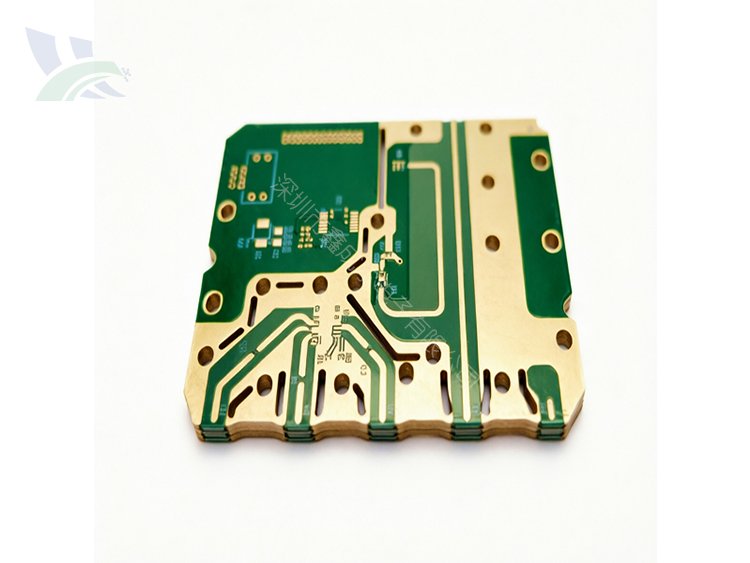
Modern data communication systems — high-speed routers, optical communication equipment, data center switches, AI servers, cloud computing hardware and 100G/400G networking — need materials with excellent signal integrity.
Requirements: controlled impedance, low insertion loss, stable dielectric performance and reduced signal jitter. Controlled impedance design is central here, and advanced hydrocarbon and PPO-based laminates are common material choices.
Many modern medical devices rely on high-frequency PCB technology for precise signal transmission and imaging performance: MRI systems, medical imaging equipment, wireless monitoring devices, RF therapy systems and diagnostic communication modules. Medical electronics need highly reliable materials with excellent electrical stability and long-term consistency.
Military and defense systems frequently operate at microwave and millimeter-wave frequencies: electronic warfare systems, military radar, secure communication systems, missile guidance electronics and surveillance equipment.
These applications require high reliability, extreme environmental resistance, stable RF performance and precision impedance control — many systems use advanced PTFE ceramic laminates for maximum signal performance.
As IoT devices get more capable, many wireless modules now operate at higher frequencies: smart home devices, Wi-Fi 6/7 modules, Bluetooth communication systems, wearable electronics and industrial wireless sensors. Compact RF modules need low-loss PCB materials to maintain stable wireless performance.
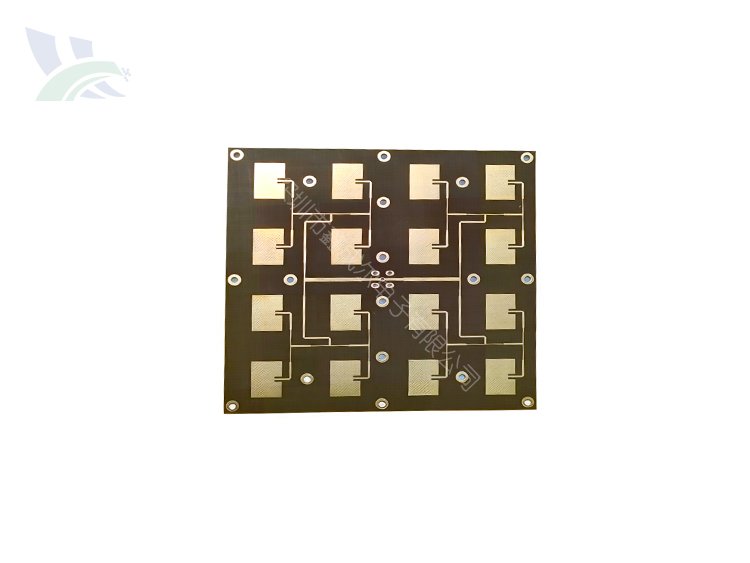
Several specialized materials cover most high-frequency production: Rogers RO4350B and RO4003C, RT5880, Taconic RF laminates, PTFE materials, hydrocarbon ceramic laminates and PPO/PPE-based substrates.
The right pick depends on frequency range, thermal requirements, manufacturing complexity and cost targets — there is no single winner across all designs.
High-frequency circuit boards have become a foundational technology in modern electronics — from 5G infrastructure and automotive radar to satellite communication, aerospace systems, medical devices and AI networking equipment.
As wireless frequencies keep rising and systems grow more complex, demand for advanced high-frequency PCB materials and manufacturing will keep growing across nearly every major technology industry.
Common questions about high-frequency circuit board applications.
A PCB engineered for signal transmission above roughly 1 GHz with low loss and stable impedance — built on PTFE, hydrocarbon ceramic or other RF-grade laminates.
5G operates at sub-6 GHz and millimeter-wave bands where ordinary materials lose too much signal. Low-loss laminates plus tight impedance control are what make the link budget work.
Telecommunications, automotive radar, aerospace and satellite, defense electronics, networking equipment and medical devices.
Rogers RO4350B and RO4003C, RT5880, Taconic RF laminates, PTFE materials and PPO/PPE-based low-loss substrates.
Their dielectric loss is about as low as commercial materials get — and it stays stable across frequency and temperature, which is ideal for microwave and millimeter-wave designs.
Whether it is 5G, radar, satellite or high-speed networking, our engineering team reviews your frequency band and stack-up, then quotes a board built for it.
Get A Project Review → Fast Reply on WhatsApp