A close look at Taconic RF-35TC — Dk 3.50, 0.51 mm thickness, and why that combination suits 5G, radar, and satellite designs.
As wireless systems evolve toward higher frequencies, greater integration, and better reliability, choosing the right RF material has become increasingly important. 5G infrastructure, satellite communication, radar, automotive electronics, and IoT devices all need substrates that hold their electrical performance while supporting compact, lightweight designs.
Among today’s high-frequency laminates, RF-35TC stands out for its stable dielectric constant (DK = 3.50) and precisely controlled thickness (0.51 mm / 0.020 inch) — a combination well suited to RF and microwave designs where signal integrity, impedance control, and long-term reliability are critical.
Two parameters sit at the heart of any RF substrate: dielectric constant and thickness. Together they determine signal propagation speed, impedance stability, insertion loss, and overall system performance — so each is worth a close look.
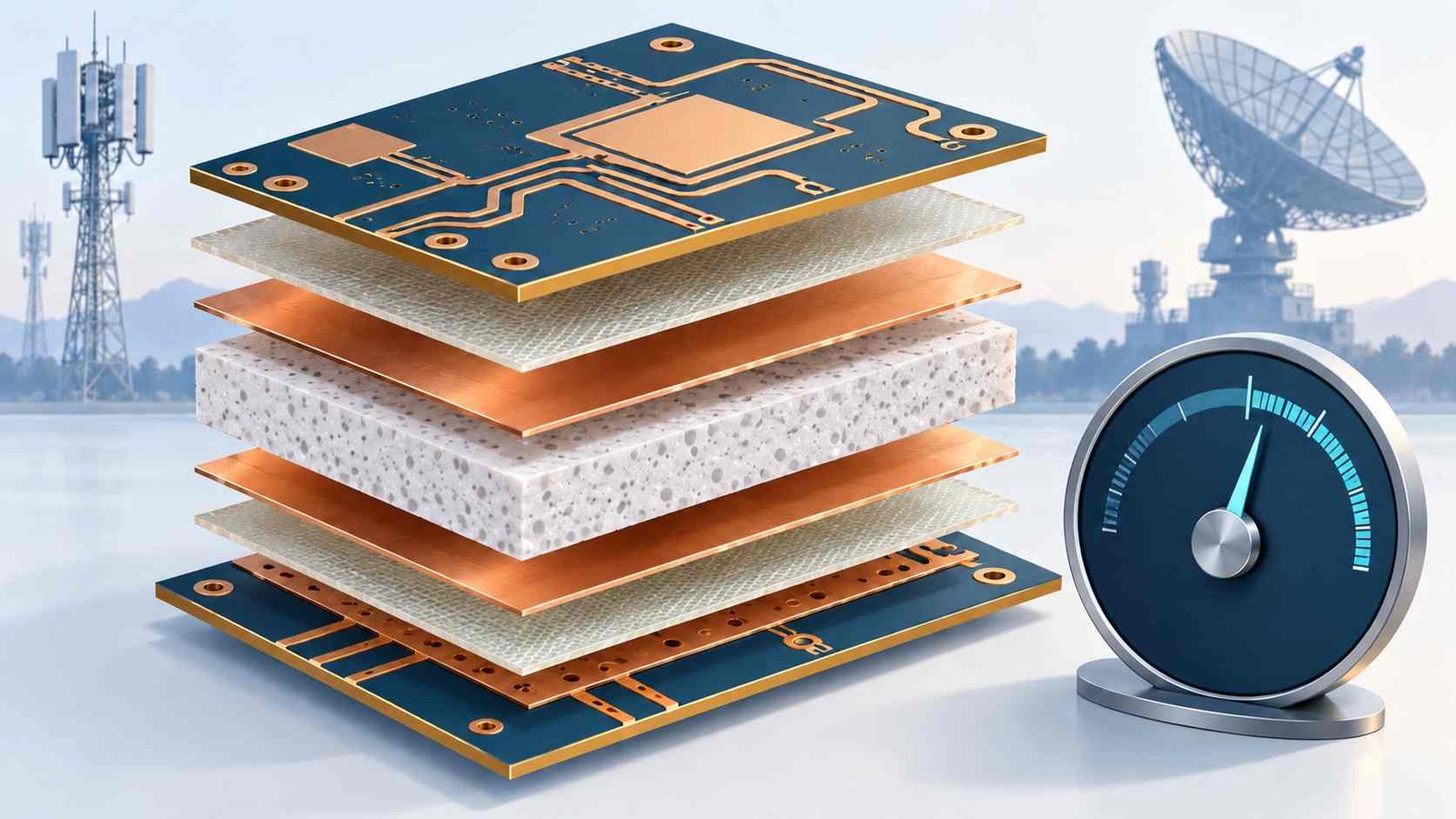
Dk directly shapes how RF signals propagate. Too high, and you get increased signal loss, slower propagation, and greater phase distortion; too low, and circuits grow physically larger, limiting integration density. DK 3.50 is the balanced middle ground.
Benefits of DK 3.50:
More importantly, RF-35TC maintains excellent dielectric stability across a wide range of frequencies and environmental conditions — the foundation of reliable performance in demanding RF applications.
As devices shrink, PCB thickness matters more and more. RF-35TC’s standard 0.51 mm thickness balances mechanical strength against miniaturization:
This thickness works particularly well in antenna structures, RF modules, and microwave circuits where dimensional accuracy directly affects electrical performance.
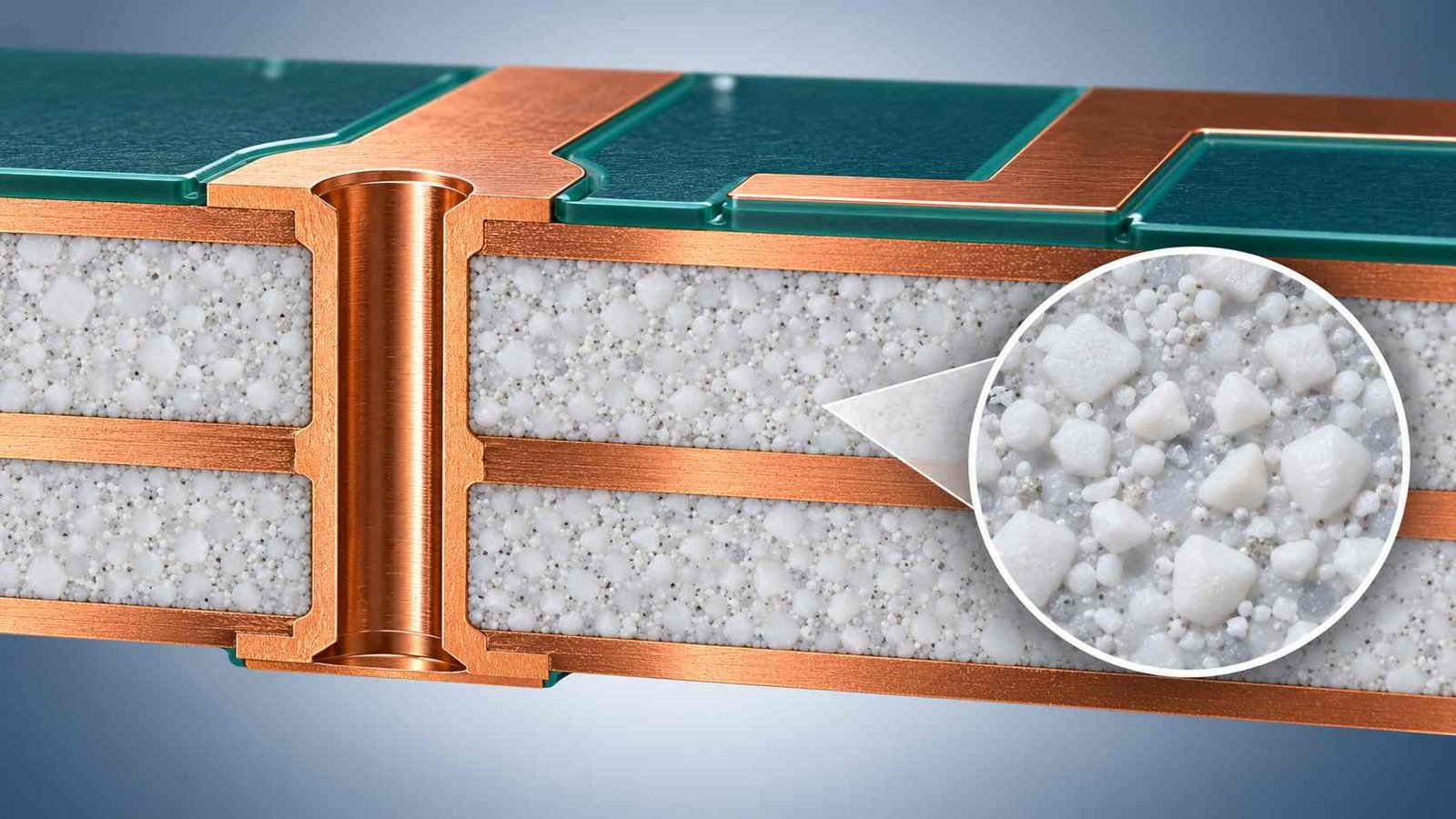
Good electrical numbers are not enough — high-frequency materials must also deliver long-term reliability, thermal stability, moisture resistance, mechanical durability, and manufacturing consistency. RF-35TC addresses all of these at once: the DK 3.50 / precise-thickness combination yields predictable impedance while minimizing insertion loss and signal reflections, which suits microwave and RF designs operating in challenging environments. For context, see our high-frequency PCB primer.
The 5G rollout has created unprecedented demand for advanced RF materials. Both Sub-6 GHz and millimeter-wave systems need substrates that stay stable under varying environmental conditions. RF-35TC supports:
Its stable dielectric constant minimizes phase variation across antenna elements, improving synchronization and network efficiency — and the thin 0.51 mm construction enables more compact antenna designs for both infrastructure and devices.
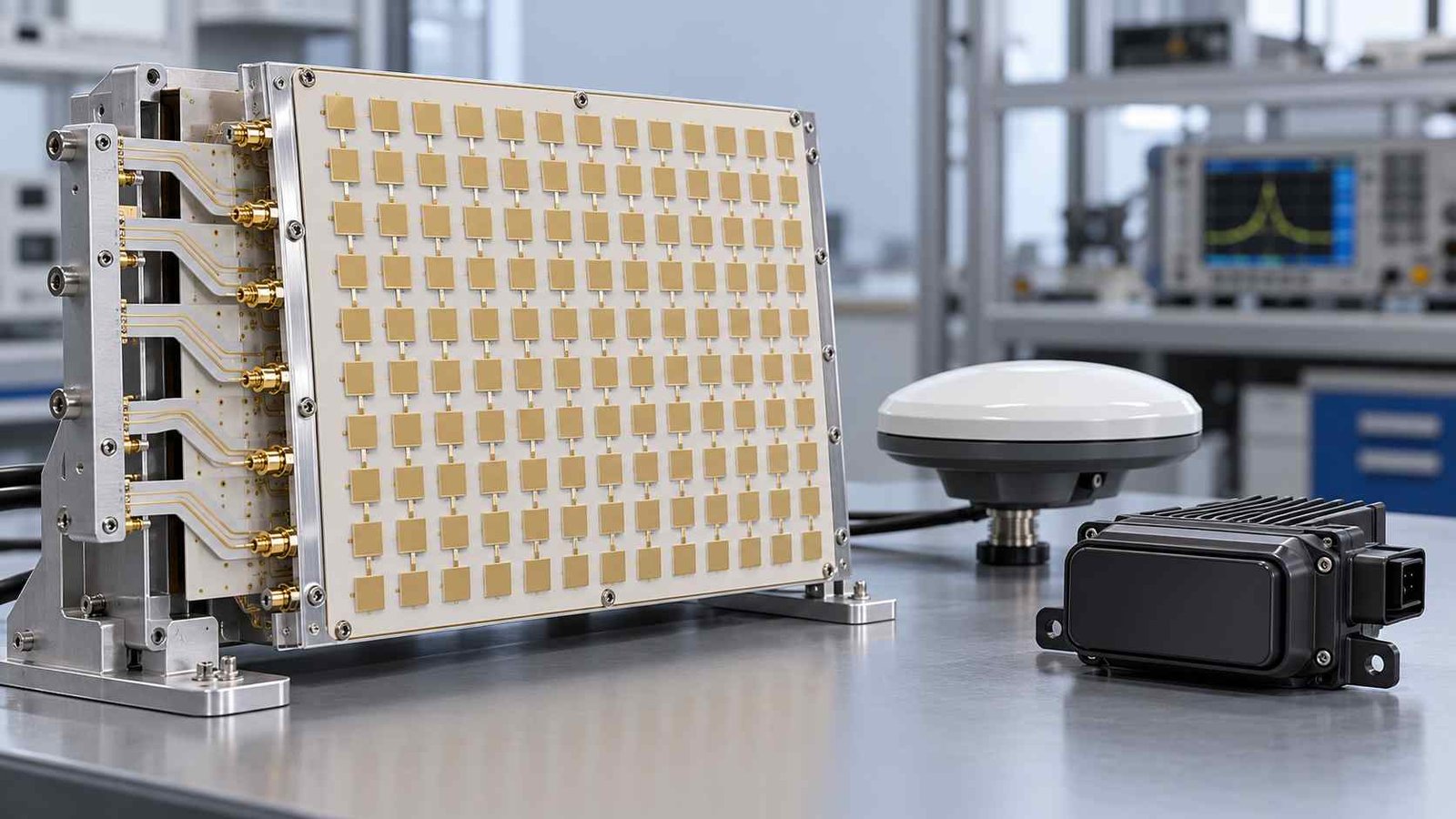
Satellite and radar systems demand exceptional signal stability in extreme temperatures, high humidity, and strong electromagnetic environments. RF-35TC provides the electrical consistency these conditions require.
Typical applications: GPS antennas, GNSS receivers, weather radar, air traffic control equipment, aerospace communication modules, and defense radar platforms. The stable DK keeps signal timing and phase control accurate — essential for navigation and radar performance.
Connected vehicles and smart devices keep driving demand for compact RF modules. RF-35TC is increasingly used in:
Its reliable performance supports both miniaturization and long-term operational stability.
RF-35TC’s consistency comes from materials engineering plus strict process control. The substrate uses optimized composite formulations balancing electrical properties, mechanical strength, thermal resistance, and moisture resistance. Precision manufacturing holds tight Dk tolerance, accurate thickness, excellent dimensional stability, and consistent batch-to-batch performance.
Every production batch is tested for dielectric constant, thickness, mechanical strength, environmental reliability, and thermal stability — the reason the material performs predictably in critical RF applications.
For engineers designing RF systems above several GHz, the advantage over conventional FR-4 is easy to see:
| Property | RF-35TC | Standard FR-4 |
|---|---|---|
| Dielectric Constant Stability | Excellent | Moderate |
| High-Frequency Loss | Low | Higher |
| Impedance Control | Superior | Limited |
| RF Performance | Excellent | Moderate |
| Signal Integrity | Excellent | Good |
| 5G/Radar Suitability | Highly Recommended | Not Recommended |
RF-35TC has established itself as a highly capable high-frequency PCB material by combining a stable DK of 3.50 with precisely controlled 0.51 mm thickness — a reliable foundation for designers seeking signal integrity, impedance stability, and long-term reliability.
Whether deployed in 5G infrastructure, satellite navigation, radar, automotive electronics, or IoT devices, it delivers the consistency modern RF applications demand. To see how Taconic materials sit in the broader lineup, browse our high-frequency materials inventory; for the cost angle, our FR-4 vs Rogers comparison covers the economics.
Quick answers on RF-35TC specifications and applications
RF-35TC has a nominal dielectric constant (DK) of 3.50, making it suitable for RF and microwave circuit applications.
One commonly used specification is 0.51 mm (0.020 inch), which balances miniaturization and mechanical stability.
Yes. Its stable dielectric properties and controlled thickness make it ideal for 5G antennas, RF front-end modules, and beamforming systems.
RF-35TC offers lower loss, better impedance control, and superior signal integrity for high-frequency applications compared with standard FR-4.
RF-35TC is widely used in telecommunications, aerospace, radar systems, satellite navigation, automotive electronics, industrial IoT, and wireless communication equipment.
Send us your required thickness and copper weight — we will confirm material availability and quote within one working day.
Request an RF-35TC Quote Fast Reply on WhatsApp