What high-frequency PCBs are, which laminate materials matter most, and the key metrics and applications that define them — a practical overview for engineers and buyers.
High-frequency PCBs are specialized printed circuit boards built to process and transmit signals at high frequencies — typically above 1 GHz. They have become critical building blocks in modern electronics, especially in telecommunications, automotive systems, and wireless communication technologies.
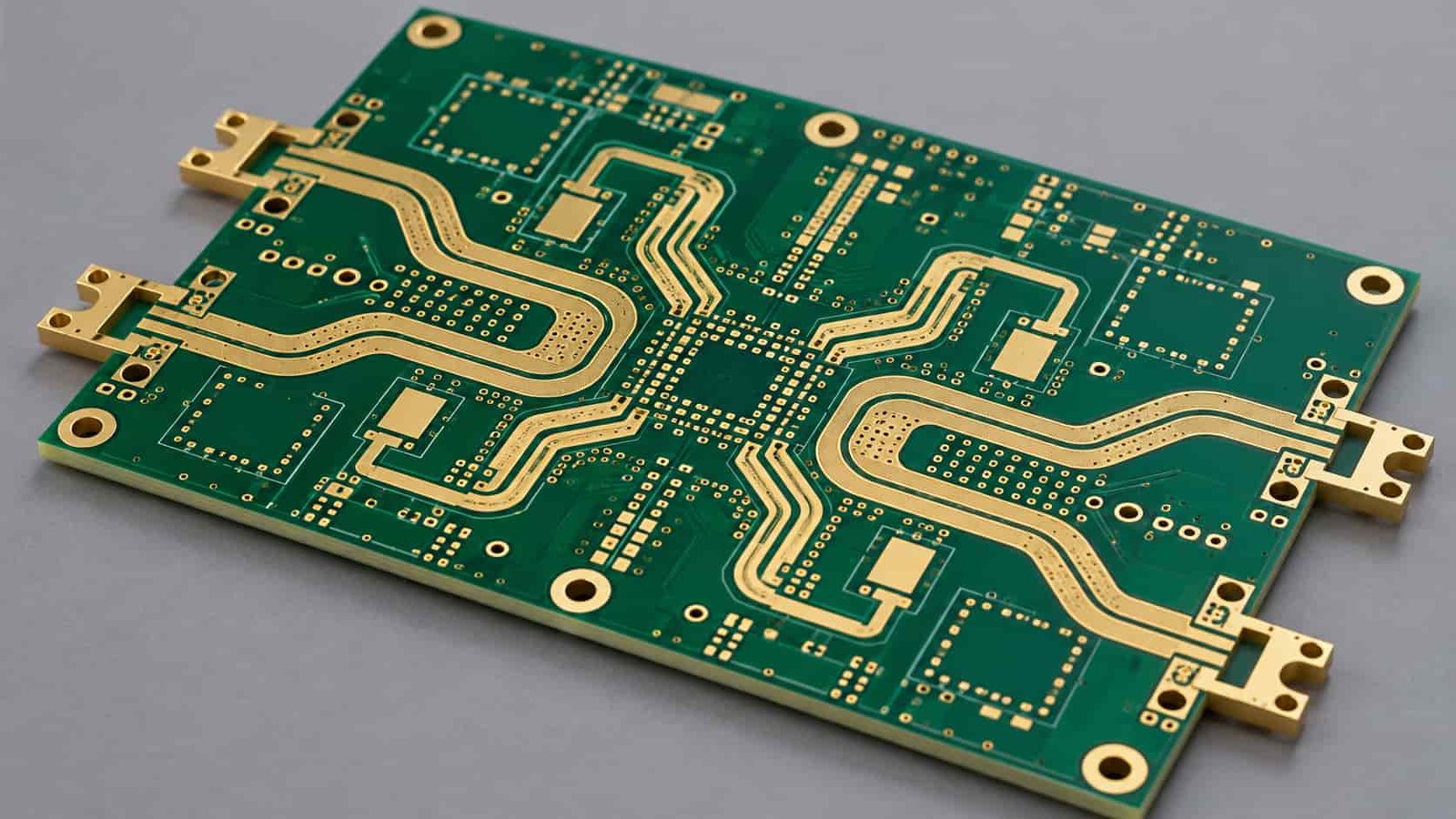
A high-frequency PCB is engineered to handle and transmit signals at high frequencies, generally above 1 GHz. The category spans everything from high-frequency circuits (above 300 MHz) to microwave circuits (above 3 GHz).
Unlike standard FR-4 boards, they demand precise material selection, strict impedance control, and low signal loss to stay reliable in demanding applications. If you are new to the topic, our guide to what a high-frequency PCB is covers the fundamentals in more depth.
Materials are chosen primarily for their dielectric properties and low signal loss. Three families dominate:
Choosing the right laminate keeps attenuation, crosstalk, and long-term reliability under control. For the cost side of that decision, our FR-4 vs Rogers materials comparison breaks down price, supply, and real-world trade-offs.
Three metrics decide whether a board holds up in the field:
Maintaining these characteristics is essential for high-speed signal transmission, particularly in telecommunications and radar systems.
These boards are at work across many industries:
For an industry-by-industry view, see our overview of high-frequency circuit board applications.
The rollout of 5G and in-vehicle 77 GHz millimeter-wave antennas has pushed demand sharply higher. High-speed data transmission needs boards that hold signal integrity at ever-higher frequencies — and that changes how high-speed boards are designed from the ground up.
The direction is clear: high-frequency PCBs are becoming indispensable in both consumer devices and telecom infrastructure.
Quick answers on high-frequency PCB materials, performance, and applications
A high-frequency PCB is designed to handle signals above 1 GHz, with low-loss materials and strict impedance control, unlike standard FR4 PCBs that are suitable for lower frequency applications.
The dielectric properties of the material directly affect signal integrity, speed, and loss. Using inappropriate materials can result in poor performance or signal degradation.
Telecommunications, automotive electronics, aerospace, and wireless communication industries benefit the most due to their reliance on high-speed signal transmission.
Send us your stack-up and target frequency — our engineering team will review manufacturability and get you a quote within one working day.
Request a Quote Fast Reply on WhatsApp