Why the RO4000 series dominates commercial RF production: FR-4-style processing, stable Dk/Df, and a laminate for every budget from RO4003C to RO4830.
As a professional manufacturer of 2–36 layer high-frequency PCBs, we have used Rogers RO4000 series laminates on many complex RF and microwave projects. This article combines production-floor experience with material science to explain why the series is an industry standard for Rogers PCB manufacturing.
The fundamental reason for its popularity is the balance of high performance and low manufacturing cost. Unlike traditional PTFE-based materials, RO4000 laminates are non-PTFE glass fiber-reinforced hydrocarbon/ceramic substrates. A key advantage is compatibility with standard FR-4 fabrication — no complex sodium etching required — which cuts processing cost while keeping the series strongly price-competitive in high-volume commercial markets.
One of the most critical factors we watch during production is the stability of the dielectric constant (Dk) and the low dissipation factor (Df). Above 500 MHz, standard FR-4 often fails from signal distortion. The RO4000 series holds its electrical properties across a wide frequency range, making it the go-to choice for controlled impedance transmission lines and broadband applications.
From years on the production floor, three mechanical advantages stand out:
The series is a diverse family, each laminate optimized for a specific technical need:
We see these materials used most often in four sectors:
As a dedicated manufacturer, we routinely stock Rogers, Taconic, and F4B materials for quick-turn production. Whether you need a 2-layer prototype or a 36-layer complex board, our facility is equipped for the demands of high-frequency laminates — see where these boards are used across industries.
Practical answers on processing, soldering, and material selection for RO4000
Yes. This is one of their biggest advantages. Unlike PTFE materials which require specialized plasma or chemical etching, RO4000 can be processed using standard epoxy/glass (FR-4) fabrication techniques, which lowers the overall cost for the customer.
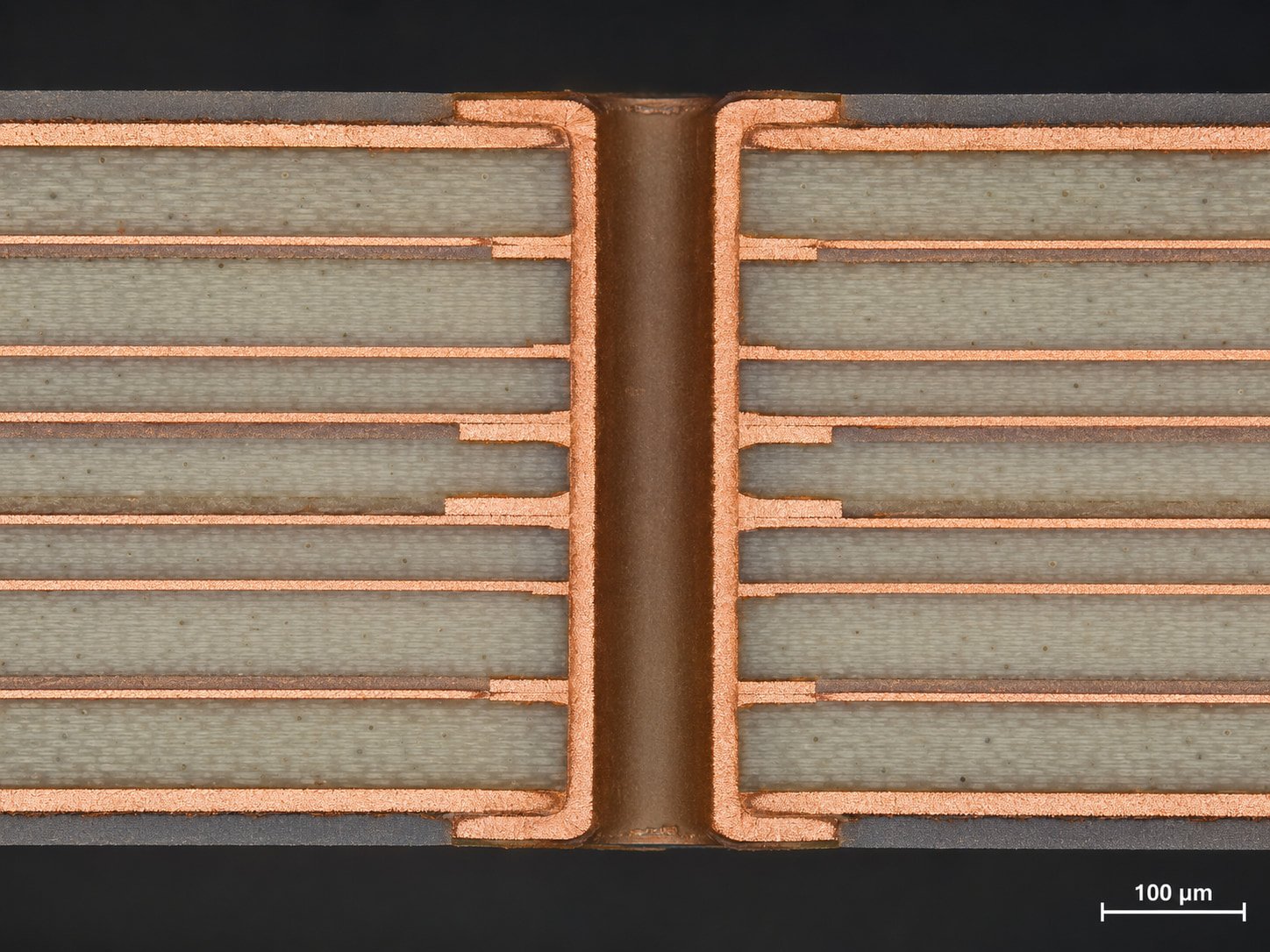
The Z-axis expansion determines how much the material grows in thickness when heated. Because RO4000 has a low Z-axis CTE, it puts very little stress on the copper plating inside the holes (vias), ensuring the board doesn't fail during soldering or extreme temperature swings.
While they share many properties, the main difference is that RO4350B is flame retardant (UL 94V-0 rated), whereas RO4003C is not. Therefore, RO4350B is more commonly used in commercial electronics that must meet strict fire safety standards.
Absolutely. The RO4000 series is designed to withstand the higher temperatures required for lead-free reflow processes without delaminating or losing electrical performance.
Send us your layer count, material choice, and target frequency — our engineers will review the stack-up and quote within one working day.
Request an RO4000 Quote Fast Reply on WhatsApp