Why RF engineers keep choosing RO4350B: PTFE-class electrical performance with FR-4 processing convenience — and what that means for your cost, lead time and yield.
Rogers RO4350B has become one of the most widely used RF laminates in modern electronics manufacturing. It pairs low dielectric loss and stable electrical performance with standard FR-4 processing — an ideal balance for high frequency PCB production, where performance and cost both have to add up.
Compared with traditional PTFE-based microwave materials, RO4350B laminates are easier to fabricate, more stable in mass production and significantly more economical at scale. That is why engineers keep specifying it for 5G communication systems, automotive radar, RF antennas, satellite communication and high-speed digital circuits.
For teams that need better signal integrity without a dramatic jump in production cost, RO4350B is usually the most practical starting point available today.
Rogers RO4350B is a hydrocarbon ceramic-filled laminate from the RO4000 series, developed by Rogers Corporation. It combines the electrical advantages of PTFE microwave materials with the manufacturing convenience of standard FR-4 processing.
Unlike standard FR-4, which suffers significant signal loss at high frequencies, RO4350B keeps its dielectric properties stable even in GHz-level applications.
Typical material properties:
| Property | Typical Value |
|---|---|
| Dielectric Constant (Dk) | 3.48 ±0.05 |
| Dissipation Factor (Df) | 0.0037 @10GHz |
| Thermal Conductivity | 0.69 W/m/K |
| Moisture Absorption | 0.06% |
| Tg | >280°C |
The biggest reason for its popularity is the balance it strikes between electrical performance and production cost.
Traditional PTFE materials offer extremely low loss, but they bring manufacturing headaches with them:
RO4350B sidesteps most of this by supporting standard epoxy/glass processing — conventional drilling equipment, standard multilayer lamination, normal plated-through-hole processes and traditional solder mask — no expensive PTFE-specific setups required.
The result for manufacturers: faster lead times, lower production costs, better yield rates and more stable batch-to-batch consistency.
The laminate’s ceramic-filled hydrocarbon construction is what makes this balance possible — a structure you can see in the cross-section below.
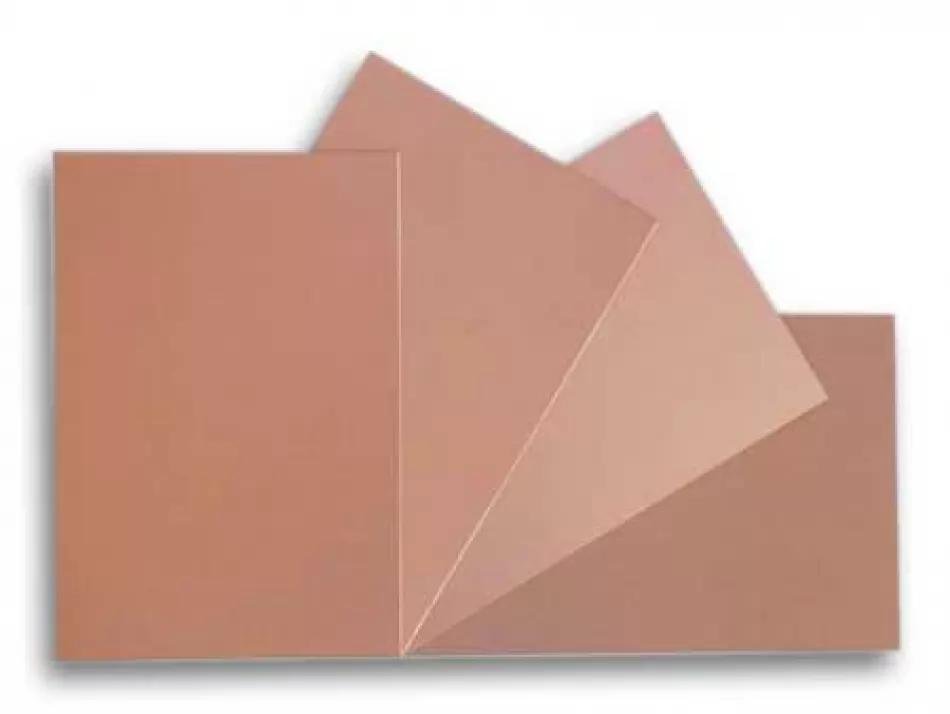
Signal loss becomes increasingly critical above 1 GHz — standard FR-4 often fails to hold signal integrity there. RO4350B provides significantly lower insertion loss and better impedance stability, which is exactly what reliable signal transmission demands.
Key advantages include:
That matters most in RF amplifiers, microwave antennas, high-speed backplanes, power divider circuits, RF filters and signal transmission modules.
Another major advantage is compatibility with FR-4 hybrid stackups — RO4350B RF layers and standard FR-4 digital layers can live in the same board, dramatically cutting overall cost while keeping RF performance where it counts.
Compared with pure PTFE laminates, the differences are easy to see:
| Feature | RO4350B | PTFE Materials |
|---|---|---|
| Mechanical Stability | Excellent | Moderate |
| Drilling Difficulty | Low | High |
| Manufacturing Cost | Moderate | High |
| Yield Stability | High | Moderate |
| Mass Production Suitability | Excellent | Limited |
From CNC drilling through multilayer lamination, RO4350B flows through the same equipment an FR-4 board does — which is the whole point.
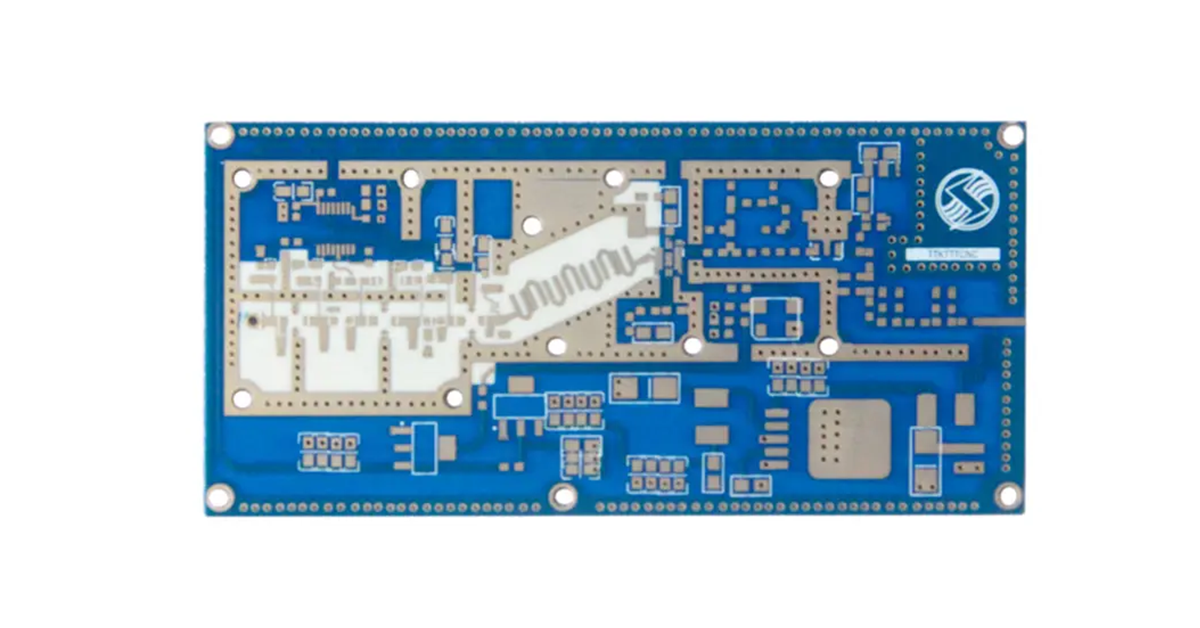
Because of its RF characteristics and manufacturing flexibility, RO4350B is widely used across multiple industries. The main ones:
RO4350B is extensively used in base station antennas, RF front-end modules, power amplifiers and signal filters — the workhorse positions of 5G radio design.
Modern ADAS and autonomous driving systems rely heavily on millimeter-wave radar, where stable RF performance is essential. Typical uses: 24 GHz radar, 77 GHz automotive radar and collision avoidance systems.
Satellite RF systems need low-loss transmission and excellent thermal reliability — both core strengths of RO4350B.
RO4350B is also common in aerospace microwave systems, thanks to dielectric properties that stay stable under demanding environmental conditions.
Beyond RF, many high-speed digital designs now use RO4350B to improve signal integrity in ultra-fast data transmission environments.
It depends largely on operating frequency and performance requirements. For a fuller cost and supply-chain comparison, see our FR-4 vs Rogers breakdown.
| Comparison | FR-4 | RO4350B |
|---|---|---|
| RF Signal Loss | High | Low |
| Impedance Stability | Moderate | Excellent |
| Cost | Low | Medium |
| GHz-Level Performance | Limited | Excellent |
| Manufacturing Difficulty | Easy | Easy |
| Thermal Stability | Moderate | High |
As a rule of thumb: below 1 GHz, FR-4 is usually sufficient; between 1–10 GHz, RO4350B is highly recommended; above 10 GHz, PTFE materials may become necessary. For many commercial RF applications, RO4350B simply offers the best overall value.
That is why it continues to dominate the RF PCB market — excellent high-frequency performance, stable manufacturing capability, lower production cost, FR-4 compatible processing and reliable large-scale fabrication all in one laminate. If your project needs that balance, our high frequency PCB manufacturing team can review your stack-up and quote the build.
Common questions about Rogers RO4350B high-frequency PCB material.
RO4350B performs best from roughly 1 GHz to beyond 10 GHz, covering most RF, microwave and high-speed digital designs. Below 1 GHz, FR-4 is usually enough; well above 10 GHz, pure PTFE materials may take over.
Yes — significantly lower signal loss, better impedance stability and more consistent RF performance. The trade-off is higher material cost, which the loss budget usually justifies once you cross 1 GHz.
Yes, and it is one of its biggest selling points. Hybrid stack-ups keep FR-4 cost on the digital layers while RF layers get RO4350B performance — most experienced fabs process the combination routinely.
Widely used, in fact. 5G antennas, RF front-end modules and base station boards all rely on it, because its low loss and stable dielectric properties hold up across sub-6 GHz and millimeter-wave designs.
It supports standard FR-4 fabrication — drilling, lamination, plating and solder mask — without PTFE-specific equipment or special handling, which improves yield and shortens lead time.
Send us your frequency band and stack-up. Our engineering team will compare RO4350B with the alternatives for your build, check the loss budget and quote your high-frequency PCB.
Get A Material Quote → Fast Reply on WhatsApp